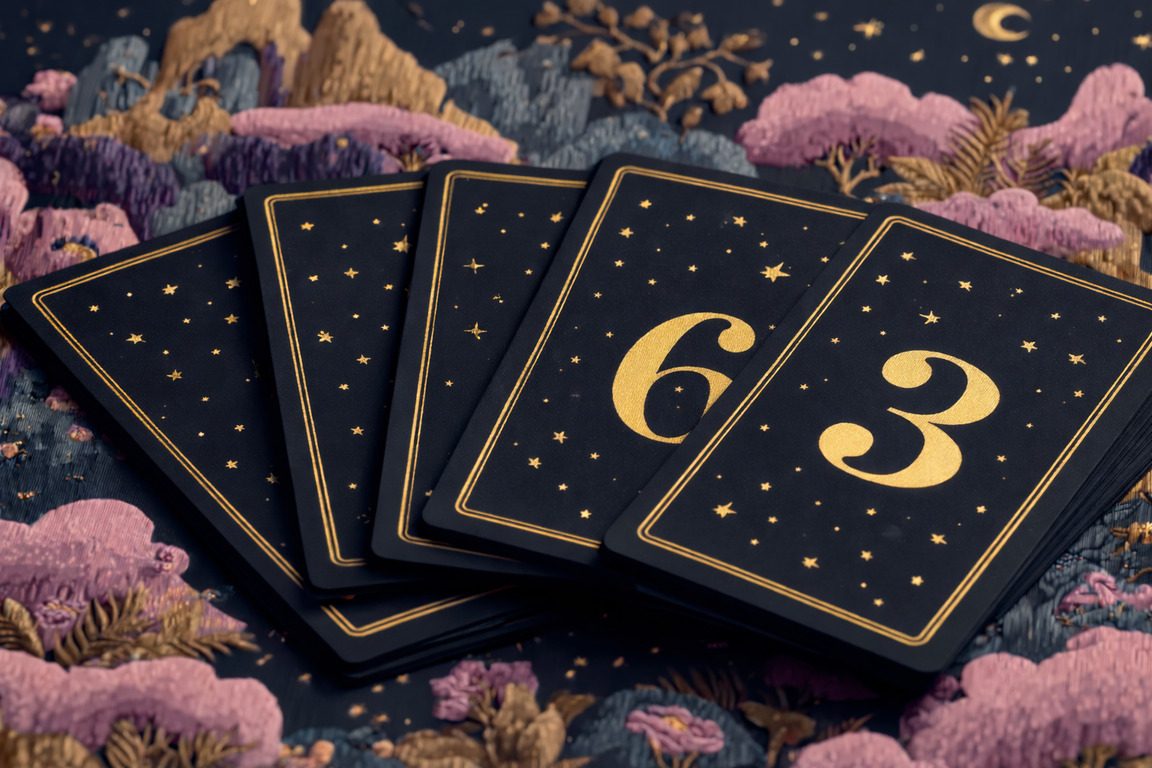
The minor arcana has 56 cards, and most people try to learn them one card at a time. That is slow, and it turns every unfamiliar card into a gap in your knowledge. There is a shortcut in the deck already. The forty numbered cards run the same ten ideas through four suits.
Tarot numerology is reading the number first and the suit second. An Ace opens something no matter which suit it belongs to, and a Ten finishes something. The suit tells you which part of life is moving.
How tarot numerology works
Each suit runs Ace through Ten, so every number shows up four times in a deck. The number tells you where in an arc the card sits. The suit tells you what the arc is about.
- Wands: drive, creative work, momentum
- Cups: feeling and relationships
- Swords: thought, words, and conflict
- Pentacles: money, work, health, the material side of life
Put the two together and you have a workable read before you look anything up. The number is the verb and the suit is the subject. That is thinner than the full meaning, and it points the right way.
Aces: new beginnings and opportunity
Aces are the seed. A new idea, a new phase, an offer nobody has answered yet. The card is about potential rather than a result.
The Ace of Wands is the moment a creative project first interests you, before any work is done. All four Aces share that freshness.
Twos: partnership and balance
Twos set two things side by side. A person and another person, one demand balanced against a second. The theme is relationship in the widest sense.
The Two of Cups is the clearest version, two people meeting as equals. Whether that reads as romance or friendship depends on the question you brought.
Threes: growth and shared effort
Threes are what happens once two things combine. Something expands, and other people are usually part of why.
The Three of Pentacles shows a craftsperson working with the people who commissioned the piece. The work improves because more than one person shapes it.
Fours: structure, stability, and staying put
Fours build a container. That can be a foundation you needed, or a wall you put up and forgot to take down. Both live in the same card, and your question decides which fits.
The Four of Swords is rest after strain. The Four of Pentacles is a grip, which can protect you or keep you small.
Fives: change and friction
Fives disturb what the Fours built. Something gets challenged, and it is uncomfortable while it happens. This is usually where a stuck situation starts moving.
The Five of Wands shows people scuffling over the same ground. Nobody is being harmed, and nobody is agreeing either.
Sixes: harmony returning
After the friction of a Five, Sixes bring things back to level. Solutions appear. The tone is calmer, without pretending the difficulty never happened.
The Six of Swords is a crossing to quieter water. It is not glamorous. The worst of it is behind you.
Sevens: reflection and deeper truths
Sevens turn inward. The action pauses and the question becomes what you actually think about the situation.
The Seven of Cups hangs several options in the air, some of them more appealing than real. It asks you to sort the wish from the thing you would genuinely choose.
Eights: action and accomplishment
Where a Seven thinks, an Eight does. These cards are about effort applied over time, and the strength that builds while you apply it.
The Eight of Pentacles is someone at a bench making the same object better and better. Mastery, shown as ordinary practice.
Nines: obstacles and contemplation
Nines sit near the end of a cycle, close enough to see it. Something still has to be handled, and the card usually asks for thought rather than more effort.
The Nine of Wands shows a figure bandaged and still on their feet. Perseverance, with the cost left visible.
Tens: completion and what comes after
Tens close the arc. A cycle ends, and the ending clears ground for the next Ace.
The Ten of Cups is a settled emotional life, the kind of ending anyone would want. The Ten of Swords is an ending nobody chooses. Both hand the suit back to its Ace.
Reading a spread through its numbers
Say someone asks about a job they have stopped enjoying, and three cards come up. The Four of Swords, the Four of Pentacles, and the Ace of Wands.
The two Fours are the loudest thing on the table. Fours hold still, so the spread describes a situation that is not moving. They hold still in different ways, though. The Four of Swords is rest the person has probably earned. The Four of Pentacles is a grip on money or security, and holding that tightly costs something.
Then the Ace. A single beginning next to two settled cards reads differently than it would alone. The spark is there. Nothing says it has been picked up yet.
None of that predicts a resignation letter. It describes someone resting while holding on tightly, with something new already in view. That is usually more useful than a forecast.
Number plus suit when a card will not come to mind
Everyone blanks. When you turn a card over and nothing arrives, ask two questions in order.
- What does this number do? Open, pair, grow, settle, disturb, calm, reflect, work, endure, finish.
- What part of life does this suit cover?
Then say the two answers together. The Five of Pentacles becomes friction in material life, close to its usual meaning of money worry or being out in the cold. The Six of Cups becomes calm returning to feeling, close to warmth carried over from the past.
After that, look at the picture. The image corrects you wherever the formula is too blunt, and that correction is how the card finally gets learned.
Common mistakes with tarot numerology
Three things go wrong more than anything else.
- Treating the numbers as a formula. Number plus suit gives you a direction, not a fixed answer. Two people can pull the Eight of Cups in the same position and need different things from it, because the situation around the card does half the work.
- Reading the number and ignoring the picture. The images hold detail no number can carry. The Nine of Pentacles and the Nine of Swords share a number, and the person in the garden has little in common with the person awake at three in the morning. When the number and the image disagree, follow the image.
- Forcing a pattern. Sometimes you draw a Three, a Seven, and a Ten, and there is no numeric story in that. A spread without a pattern is fine as it is, and inventing one crowds out what the cards were saying.
Common questions
What do the numbers in tarot mean?
In the minor arcana, the numbers track a cycle from start to finish. Aces begin something, the middle numbers develop and disturb and repair it, and Tens complete it. The same ten meanings apply in all four suits, so the number gives you the shape of a card and the suit gives you the setting.
Do the numbers mean the same thing in every suit?
The theme carries across, and the flavor changes. A Five is friction in all four suits. In Pentacles it tends to look like money or health strain, in Cups like disappointment, in Wands like open competition, in Swords like an argument you won and did not enjoy winning.
What about the court cards?
They sit outside this system. Pages, Knights, Queens, and Kings are not numbered in the Ace to Ten sense, and reading them by number does not work. Courts read as roles instead, either a person in your life or an approach you could take. Learn them separately.
Trying it on your next spread
Pull three cards and name the numbers before you name anything else. Then read them the way you normally would and see how much the numbers had already told you.